



VP-2 Battery Guide: Extending Your Portable Oxygen Runtime
CODE
Using a portable oxygen concentrator throughout the day can make everyday routines feel much more manageable. However, planning around battery life is important because your device needs reliable power whenever you are away from a mains socket. Understanding how a portable oxygen battery works, what affects its runtime, and when to carry a spare can help you avoid unnecessary interruptions.
A good battery life plan is not simply about charging the battery before leaving. Your oxygen setting, how long you will be away, access to mains power, and whether you have a spare portable oxygen battery all matter. Portable concentrators are designed around different power and oxygen-delivery systems, so their battery performance can vary considerably.
How Long Does a Portable Oxygen Battery Last?
Battery runtime depends on the concentrator, the selected oxygen setting, and how the device is being used. For the VARON VP-2, the standard battery provides up to 3.5 hours of battery life at a 1 L setting. This runtime should be treated as a reference rather than a guarantee that every user will get exactly the same results. Higher oxygen settings generally require more power, while factors such as battery age and operating conditions can also affect how long a portable oxygen battery lasts.
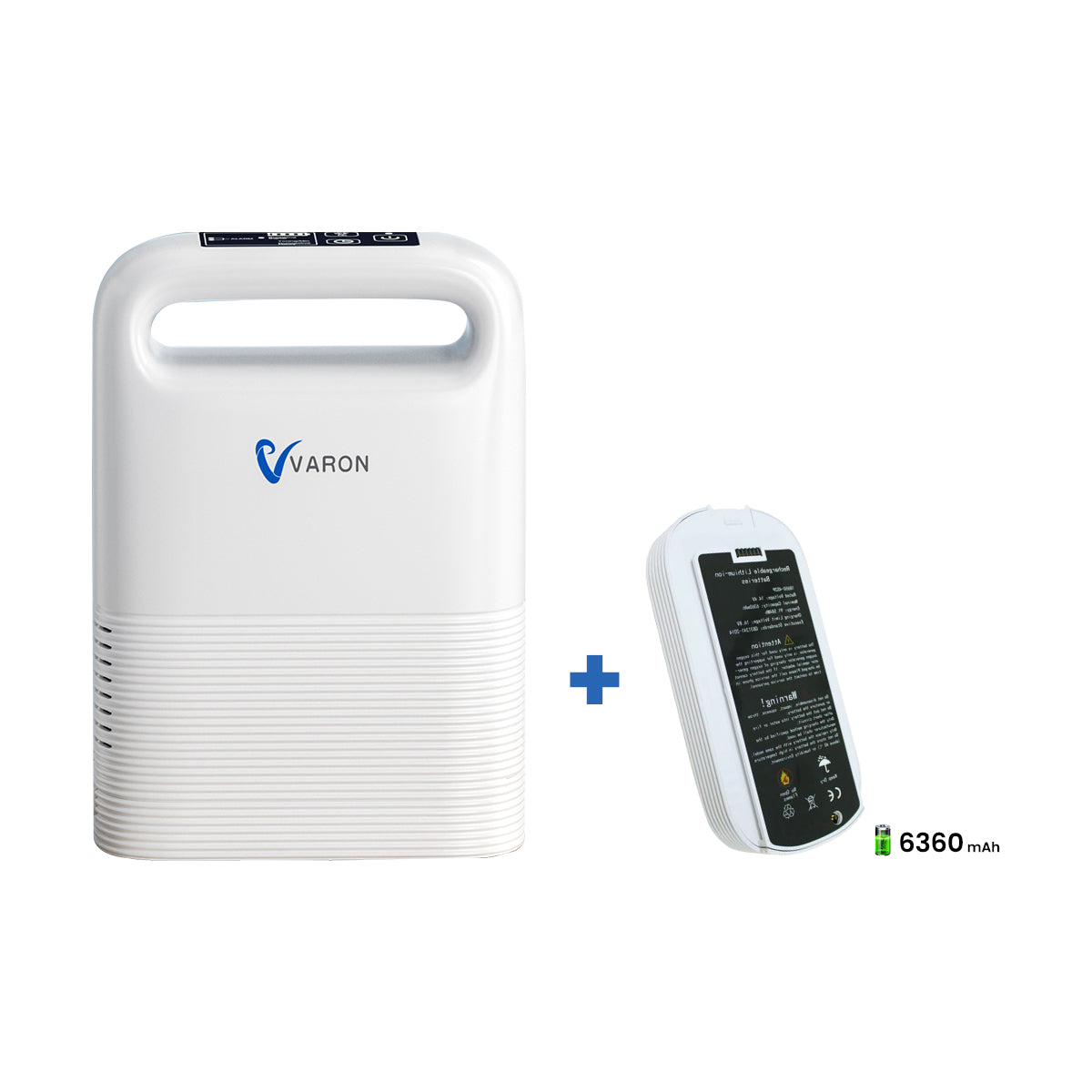
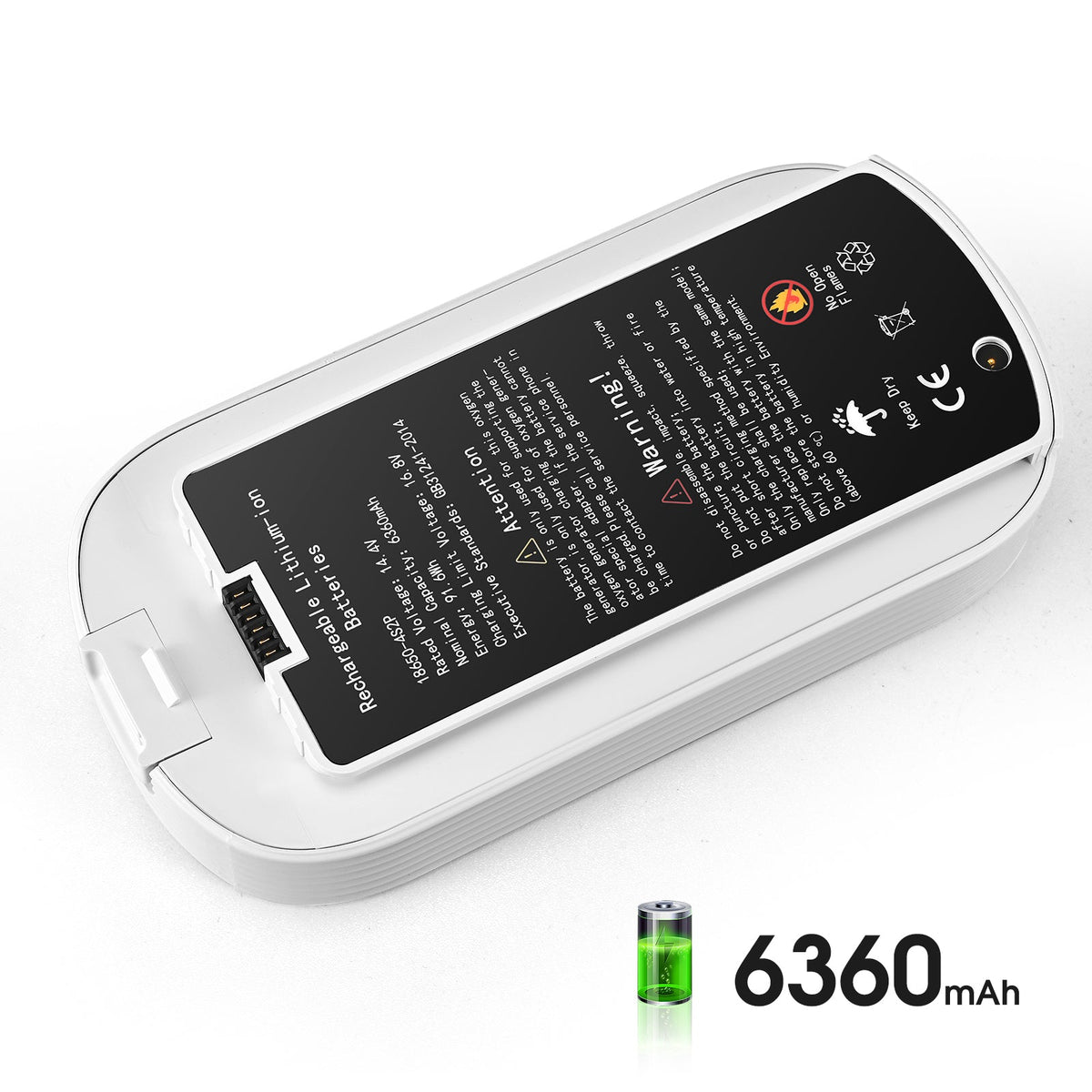
The VP-2 uses a replaceable battery, allowing users who spend longer periods away from a power outlet to carry additional power. For greater freedom of use, extended batteries are sold separately. The 8-cell battery (6,360 mAh) provides up to 160 minutes of runtime and takes approximately 3 hours to charge, while the larger 16-cell battery (10,400 mAh) provides up to 320 minutes of battery life and takes approximately 4.5 hours to charge.
Choosing the right battery option depends on how long you expect to use the VP-2 between charging opportunities. A standard battery may be suitable for shorter outings, while an extended battery can provide additional flexibility for longer periods away from mains power. Carrying a fully charged spare can also help reduce the risk of unexpected interruptions during the day.
Actual battery performance can vary depending on the selected oxygen setting and usage conditions. Always follow the instructions for charging, battery replacement, and operation, and use the oxygen setting recommended for you.
What Can Reduce Battery Runtime?

Higher oxygen settings
The VP-2 offers adjustable oxygen flow from 1 to 5. If your prescribed setting is higher, the battery may not last as long as it does at 1 L.
Never change your prescribed oxygen setting simply to make the battery last longer. The correct setting should always come from your healthcare professional.
Using the device without a charging plan
A common mistake is leaving with a full battery but no idea when the next charging opportunity will be available.
Instead, estimate how many hours you expect to be away, check your current battery level, and decide whether you need a spare portable oxygen battery before leaving.
An ageing battery
Rechargeable batteries naturally lose some capacity over time. European Respiratory Society information notes that the lithium-ion batteries commonly used in portable oxygen concentrators gradually degrade with use.
If your device once lasted much longer but now reaches low power considerably sooner, it may be worth checking the battery condition and the manufacturer's recommendations rather than simply assuming the concentrator itself has a problem.
Practical Ways to Extend Battery Life

You do not need complicated tricks to get better battery life. A little preparation can make a noticeable difference.
Start with a fully charged battery
Before a long day away, fully charge the battery according to the manufacturer's instructions. Avoid beginning an outing with a partially charged battery unless you already know where you can recharge.
For regular use, it can help to make charging part of your daily routine so the device is ready when you need it.
Carry a charged spare
For someone who regularly spends several hours away from a mains socket, a spare battery can provide useful flexibility.
With the VP-2, the battery is replaceable, so a charged spare portable oxygen battery can be carried separately and changed when the installed battery is running low.
Rather than waiting until the battery reaches zero, plan your changeover in advance. This gives you more time to deal with an unexpected delay.
Keep the air intake clear
The VP-2 needs an unobstructed air intake to operate correctly. Do not cover the device with clothing, bags or other materials while it is running.
The VP-2 intake filter cotton is not washable. VARON recommends replacing it after every 100–200 hours of use, or sooner if it becomes dirty. Keeping up with this maintenance is an important part of looking after the concentrator.
Use the correct power source
The VP-2 supports DC 12–16.8V and AC 100–240V, 50/60Hz. Its car power adapter is intended to power the device, but it does not charge the battery.
If using the device in a vehicle, VARON advises starting the engine and allowing it to stabilise before connecting the car power cable to the cigarette lighter socket. This helps reduce the risk of damage from an unstable power supply.
Planning Spare Batteries for an All-Day Routine
Extra Replaceable Lithiumion Battery Oxygen Concentrator Accessories VP-2
If you need oxygen support for most of the day, think of your batteries as part of a simple power plan.
For example, someone leaving home in the morning and expecting to be away for six or seven hours should not assume that one VP-2 battery will cover the entire period. At the stated 3.5-hour runtime at 1 L, carrying a fully charged spare can provide additional flexibility.
Your actual needs will depend on your prescribed setting and how long you use the concentrator. It is better to carry enough power for your planned time away, plus some extra allowance for delays.
Store spare batteries carefully and keep them away from excessive heat, moisture and physical damage. Follow the manufacturer's instructions for charging, storage and replacement.
Why the VARON VP-2 Can Help With Portable Oxygen Planning
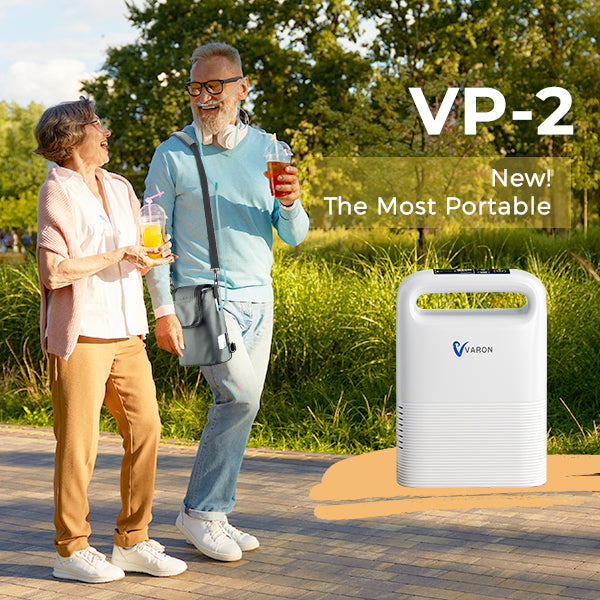
The VARON VP-2 is designed for people who want a compact oxygen concentrator that is easier to carry during daily activities.
It weighs 4.85 lb and measures 7.2 × 3.6 × 10.1 inches. Its adjustable 1–5 oxygen flow, 93% ±3% oxygen concentration and replaceable 92Wh/6400mAh battery make it suitable for users who need a portable setup and want more control over their power planning.
The VP-2 also has Sensor Mode, which responds when inhalation is detected, and Auto Mode, which releases oxygen every three seconds when breathing is too mild for the sensor to detect. These functions are designed to help maintain oxygen delivery according to the device's operating system.
A large LED panel makes the device information easier to check, while the automatic shutdown timer can be set from 1 to 240 minutes.
If portable oxygen is part of your daily routine, plan your power before you plan your day. A charged VP-2 and a prepared spare battery can make time away from a socket much less stressful.
Battery and Device Care Tips
Keep these simple habits in mind:
-
Charge your battery according to the manufacturer's instructions.
-
Check the battery level before leaving.
-
Carry a charged spare when your planned time away may exceed your available battery life.
-
Keep the air intake clear while operating the concentrator.
-
Replace the non-washable intake filter cotton after 100–200 hours or sooner if dirty.
-
Clean the oxygen inhaler head approximately once a week.
-
Clean the nasal cannula after each use.
-
Keep batteries away from excessive heat and moisture.
-
Never alter your prescribed oxygen setting just to conserve power.
-
Follow the VP-2 operating instructions for charging and battery replacement.
Oxygen equipment should also be kept away from smoking, naked flames and other fire sources. European respiratory guidance highlights the importance of keeping oxygen equipment safely away from flames and heat sources because oxygen can increase fire risk.
Key Takeaways
-
The VP-2 has a stated battery life of up to 3.5 hours at a 1 L setting.
-
Its replaceable battery is rated at 92Wh/6400mAh.
-
Higher oxygen settings can affect how long your portable oxygen battery lasts.
-
Carrying a fully charged spare battery is useful for longer days away from mains power.
-
The car adapter powers the VP-2 but does not charge its battery.
-
Keep the air intake clear and replace the non-washable filter as recommended.
-
Always follow your prescribed oxygen setting rather than changing it to save power.
-
Good preparation is the easiest way to avoid unexpected power interruptions.
Conclusion
Good battery life planning is really about reducing uncertainty. Knowing how long your VP-2 can operate, carrying a charged portable oxygen battery when needed, and checking your power before leaving can make daily activities feel more organised and comfortable.
The VP-2 provides a stated battery life of up to 3.5 hours at 1 L and uses a replaceable 92Wh/6400mAh battery, giving users the option to prepare additional power for longer periods away from a socket. A spare portable oxygen battery can be especially useful when your day may run longer than expected.
Remember that battery planning should support, not replace, the oxygen routine recommended for you. Prepare your power, protect your comfort, and give yourself the confidence to get through the day with fewer unnecessary interruptions.
Frequently Asked Questions
How long does the VARON VP-2 battery last?
The VP-2 has a stated battery life of up to 3.5 hours when used at a 1 L setting. Actual runtime can vary depending on the selected setting and usage conditions.
Can I carry a spare portable oxygen battery?
Yes. The VP-2 uses a replaceable 92Wh/6400mAh battery, allowing users to carry a charged spare portable oxygen battery for longer periods away from a power socket.
Does the VP-2 car adapter charge the battery?
No. The VP-2 car power adapter is designed to power the device and does not charge the battery.
How can I make my portable oxygen battery last longer?
Start with a full charge, use the prescribed oxygen setting, keep the air intake clear, maintain the device properly and carry a spare portable oxygen battery when you expect to be away for an extended period.
What should I do if my battery no longer lasts as long?
Battery capacity can decrease with repeated use over time. If your battery life has noticeably reduced, check the battery condition and follow VARON's guidance on battery replacement and care.


