



VP-8 Lite vs VP-8G: Which Premium Portable Suits You?
CODE
Choosing between the VP-8 Lite vs VP-8G comes down to your prescribed oxygen needs, preferred battery runtime and daily routine. Both are lightweight options, but the VP-8 Lite vs VP-8G comparison reveals differences in settings, oxygen concentration and noise levels that are worth understanding before you buy a premium portable oxygen concentrator.
The VP-8 Lite weighs 4.4 lbs and has seven settings, while the VP-8G weighs 4.37 lbs and offers eight. Both provide two oxygen delivery modes and flexible power options. However, the right premium portable oxygen concentrator is not simply the one with the highest numbers; it must match the settings recommended by your healthcare professional.
VP-8 Lite vs VP-8G: What Are the Main Differences?
Both models are designed to make prescribed oxygen support easier to manage during everyday activities. The key differences are their listed oxygen concentration, number of settings, battery capacity and noise levels.
| Feature |
|
|
|---|---|---|
| Weight with battery | 4.4 lbs (2 kg) | 4.37 lbs (1.98 kg) |
| Adjustable settings | 1–7 | 1–8 |
| Oxygen concentration | 90% | 93% ± 3% |
| Delivery modes | Breath-sensing pulse and fixed-frequency | Pulse on breathing and fixed-time auto pulse |
| Battery capacity | 92.16 Wh | 96.48 Wh |
| Listed battery runtime | 1.5–5 hours ±15%, depending on setting | Up to 4 hours |
| Noise level | 45–60 dB, depending on setting | ≤40 dB at level 1 |
| Power options | Battery, AC adapter and car power cord | Battery, AC adapter and car adapter |
| Dimensions | 6.9 × 3.4 × 7.7 in | 8.1 × 7.7 × 3.3 in |
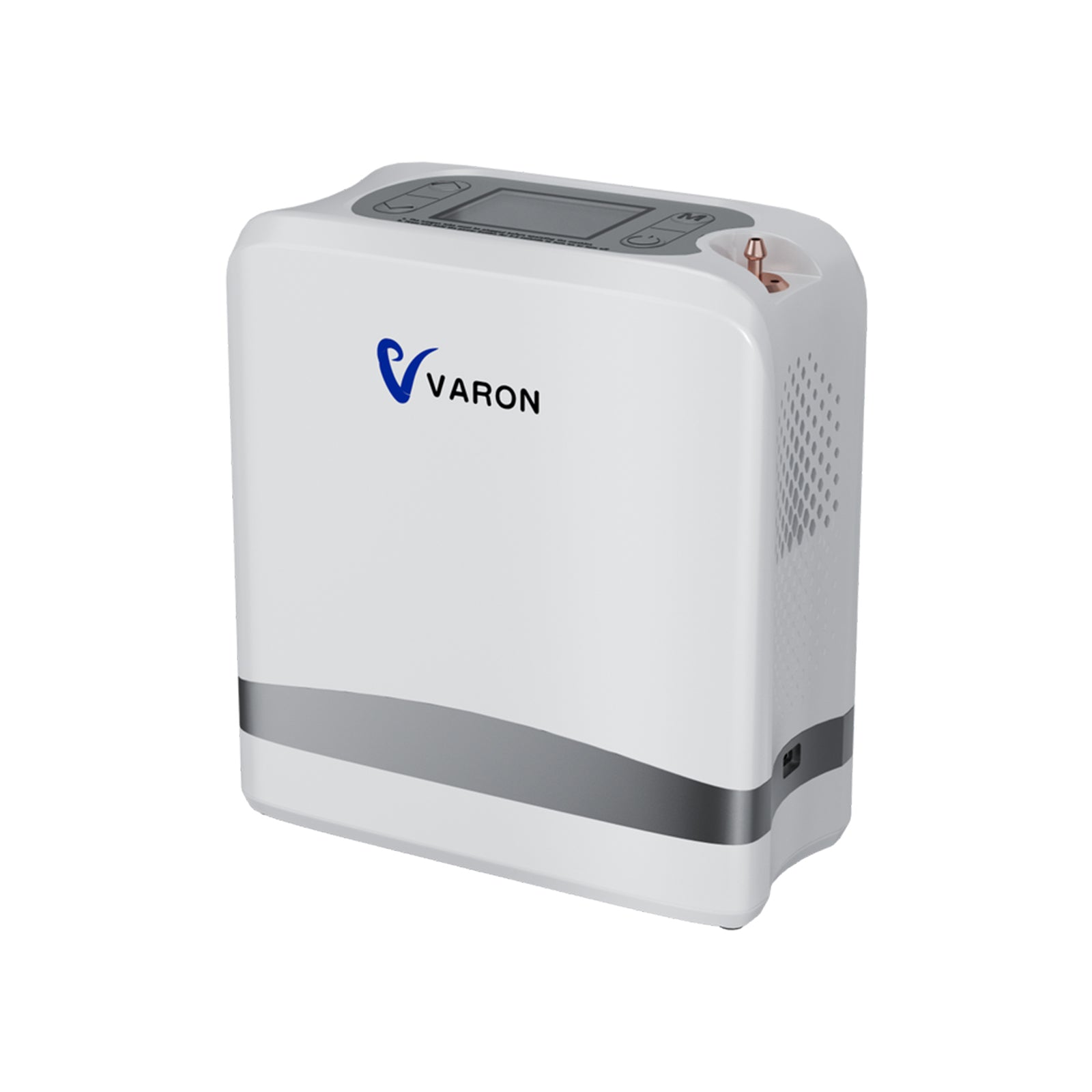
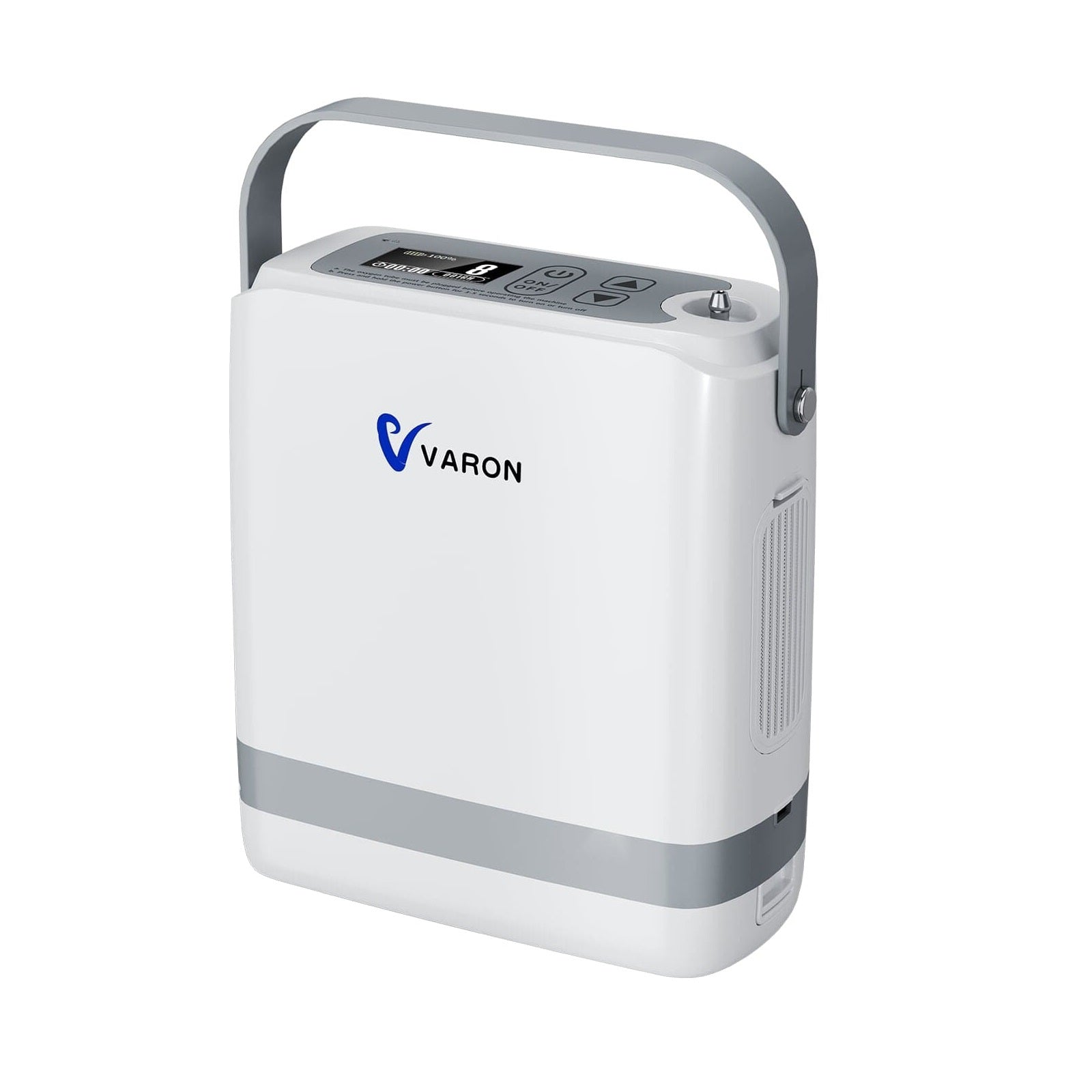
Specifications are based on the supplied product information. Battery life varies with settings and usage. The runtime figures are not directly comparable because the stated conditions differ.
Which Model Is Lighter and Easier to Carry?
When comparing the VP-8 Lite vs VP-8G, the weight difference is only 0.03 lbs, so both are lightweight choices. The Lite weighs 4.4 lbs with its battery, while the VP-8G weighs 4.37 lbs.
That small difference is unlikely to be the deciding factor for most people. Consider how you plan to carry your device: for example, during a short walk, while visiting family or when running everyday errands.
The VP-8 Lite includes a carrying bag and shoulder strap. The VP-8G includes a multifunctional bag with hand, shoulder and backpack carrying options. If carrying style matters to you, compare these arrangements before choosing a premium portable oxygen concentrator.
Which Has Better Settings and Oxygen Concentration?

The VP-8 Lite offers seven adjustable settings and a listed oxygen concentration of 90%. The VP-8G provides eight settings and a listed concentration of 93% ± 3%.
More settings do not automatically mean a device is right for every user. Oxygen requirements vary, and the number on a device should not be used to decide your oxygen needs independently.
Both models offer a breath-sensing mode and a timed delivery option. The VP-8 Lite can switch to fixed-frequency delivery if it does not detect a breath within 10 seconds; its fixed-frequency mode delivers oxygen every four seconds. The VP-8G also provides breath-triggered and timed delivery.
Before choosing a premium portable oxygen concentrator, ask your healthcare professional whether its delivery method and available settings match your prescribed requirements.
Which Model Offers Better Battery Life?
Battery life is especially important if you spend time outdoors or cannot rely on a power socket throughout the day.
The VP-8 Lite lists a runtime of 1.5–5 hours ±15%, depending on the selected setting. Its battery capacity is 92.16 Wh, and its listed charging time is around three hours.
The VP-8G has a 96.48 Wh removable battery and a listed runtime of up to four hours. Actual operating time depends on the setting and how the device is used, so maximum figures should not be treated as guaranteed everyday performance.
For either model, plan around your expected time away, check the battery before leaving and understand your backup arrangements. A premium portable oxygen concentrator should fit your routine without encouraging you to take risks with your prescribed oxygen supply.
Which Is Better for Your Lifestyle?

Consider the VP-8 Lite if…
You want seven settings, a lightweight design and a published battery-runtime range of up to five hours, depending on setting. Its LCD display, simple controls and two delivery modes may suit someone who values straightforward operation.
Explore the VARON VP-8 Lite product page for its full specifications.
Consider the VP-8G if…
You want eight settings, a listed oxygen concentration of 93% ± 3%, and flexible carrying options. Its listed noise level is ≤40 dB at setting 1, although the supplied specification does not give a maximum noise figure for every setting.
See the VARON VP-8G product page for further details.
Neither model is automatically the better choice for everyone. Your prescribed settings, comfort when carrying the device, access to charging and practical daily needs should guide your decision.
What Should You Check Before Buying?
Before buying a premium portable oxygen concentrator, confirm these points:
-
Professional guidance: Check that the model and its delivery method are suitable for your prescribed oxygen needs.
-
Battery planning: Compare the stated runtime with how long you expect to be away from a power source.
-
Ease of use: Make sure you can read the display, change settings as instructed and understand the alerts.
-
Maintenance: Follow the user manual for cleaning the exterior, vents, filters and nasal cannula.
-
Power options: Check which adapters and batteries are included and understand how to use them safely.
The NHS explains that oxygen should only be used when prescribed and according to professional guidance. Read its oxygen treatment guidance before making decisions about oxygen use.
Key Takeaways
-
The VP-8 Lite vs VP-8G comparison shows that both weigh about 4.4 lbs.
-
The Lite has seven settings and a listed concentration of 90%; the VP-8G has eight settings and a listed concentration of 93% ± 3%.
-
The Lite lists 1.5–5 hours ±15% of battery runtime, while the VP-8G lists up to four hours. These figures depend on usage and should not be treated as directly equivalent.
-
The best premium portable oxygen concentrator is the model that matches your professional guidance and daily needs, not simply the one with more settings.
Conclusion
When deciding VP-8 Lite vs VP-8G, focus on the differences that matter to your routine: settings, oxygen concentration, battery expectations and carrying options. The VP-8 Lite offers seven settings and a stated runtime range of 1.5–5 hours ±15%, while the VP-8G provides eight settings and a listed concentration of 93% ± 3%.
Both may be worth considering as a premium portable oxygen concentrator, provided the selected device is appropriate for your prescribed oxygen needs. Compare the verified specifications, review the manuals and speak with your healthcare professional before making your choice.
Ready to compare the details? Review the VP-8 Lite and VP-8G product pages, then choose based on your individual requirements—not marketing claims alone.
Frequently Asked Questions
Is the VP-8 Lite lighter than the VP-8G?
They are almost the same weight with their batteries: 4.4 lbs for the VP-8 Lite and 4.37 lbs for the VP-8G.
Which model has more settings?
The VP-8 Lite has seven settings, while the VP-8G has eight. Your healthcare professional should confirm which settings are appropriate for you.
Which model has longer battery life?
The VP-8 Lite lists 1.5–5 hours ±15%, depending on setting. The VP-8G lists up to four hours. Actual runtime varies with use.
Can both models operate without being plugged in?
Yes. Both include a rechargeable battery and support external power options. Check the user manual for safe operation and charging instructions.
How do I choose the right portable oxygen concentrator?
Discuss your oxygen requirements and the device's delivery method with your healthcare professional. Then compare weight, settings, battery runtime, carrying options and maintenance needs.


