



VL-1 vs VP-2: Comparing Pulse Dose Oxygen Concentrators
CODE
Choosing a portable oxygen concentrator means looking beyond the product name. Weight, oxygen concentration, pulse settings, battery runtime, and everyday portability can all affect how well a device fits a person's routine. When comparing the VL-1 vs VP-2, the main question is not simply which model has more features, but which specifications match the user's daily needs.
The VARON VL-1 and VARON VP-2 are both portable pulse dose oxygen concentrator options, but they take different approaches. The VL-1 emphasizes a lightweight design and simple operation, while the VP-2 provides adjustable settings, higher stated oxygen concentration, and a replaceable battery.
What Is a Pulse Dose Oxygen Concentrator?
A pulse dose oxygen concentrator delivers oxygen in pulses that correspond with inhalation rather than producing a continuous flow. This design can help portable equipment remain relatively compact while allowing battery power to be used according to the device's delivery system.
For people comparing portable models, understanding pulse delivery is important because settings, breath detection, battery capacity, and device weight can influence everyday use.
When looking at the VL-1 vs VP-2, these differences become particularly relevant for people who have different activity levels or portability requirements.
VL-1 vs VP-2: Key Specifications Compared
The following comparison summarizes the supplied specifications for both models:
| Feature |
|
|
|---|---|---|
| Maximum flow capacity | Equivalent up to 3L, fixed pulse rate | Adjustable settings 1–5 |
| Oxygen concentration | 32.5% ± 2.5% | 93% ± 3% |
| Delivery system | Multi-stage molecular sieve (PSA) | Sensor Mode + Auto Mode |
| Weight | 3.08 lbs (1.4 kg) | 4.85 lbs (2.2 kg) |
| Standard battery | 2500mAh, up to 2.2 hours | 6400mAh / 92Wh, up to 3.5 hours at setting 1 |
| Extended power | Optional 5000mAh battery, up to 5 hours | Replaceable battery |
| Dimensions | 8.07 × 5.11 × 3.75 in | 7.2 × 3.6 × 10.1 in |
| Timer | 40, 60, 80, 180 minutes | 1–240 minutes |
| Noise | Standard operating whisper | ≤58 dB(A) |
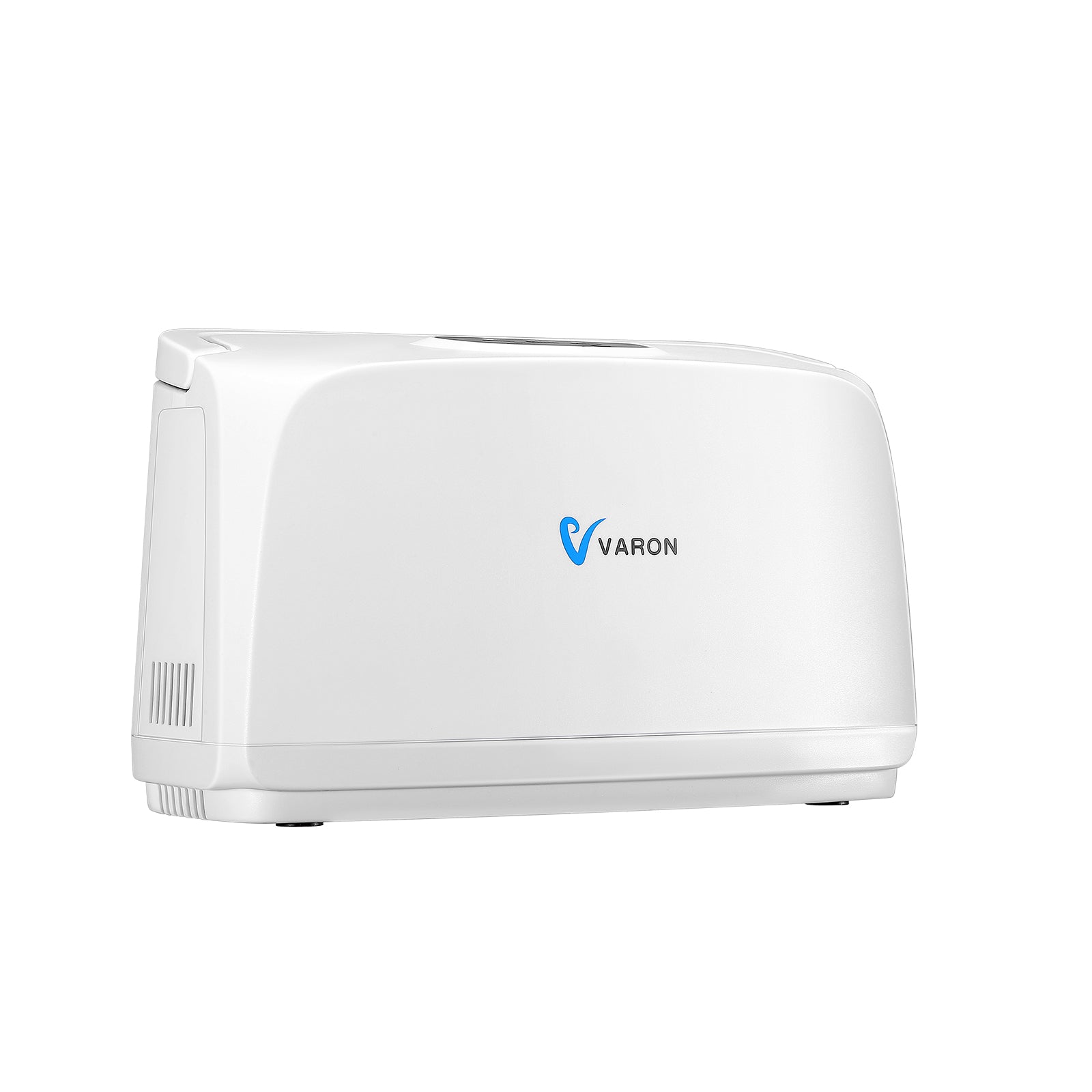
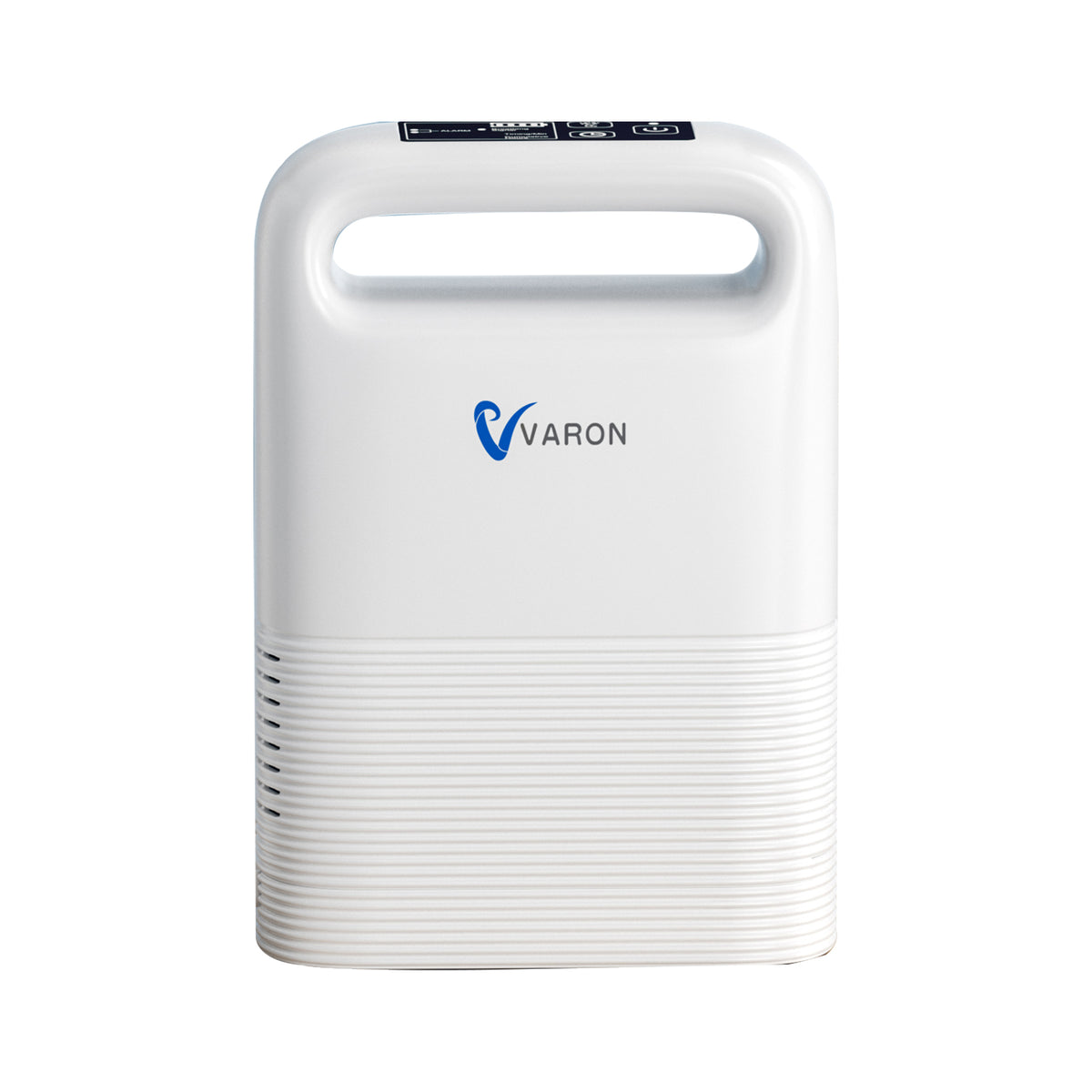
These specifications show the central difference in the VL-1 vs VP-2 comparison: the VL-1 prioritizes lower weight, while the VP-2 offers more adjustable settings and a larger replaceable battery.
How Do the VL-1 and VP-2 Differ?
VL-1: Lightweight and Simple

The VARON VL-1 weighs 3.08 lbs (1.4 kg), making weight one of its most noticeable characteristics. Its compact dimensions and shoulder bag are suited to users who place a strong emphasis on carrying convenience.
The VL-1 uses a fixed pulse rate and provides a maximum flow capacity equivalent to 3L. Its standard 2500mAh battery provides up to 2.2 hours of operation, while the optional 5000mAh battery can extend operation to up to 5 hours according to the supplied specifications.
For someone comparing a pulse dose oxygen concentrator primarily around portability, the VL-1's lower weight may be an important consideration.
VP-2: More Adjustable Settings and Battery Flexibility

The VARON VP-2 weighs 4.85 lbs (2.2 kg), so it is heavier than the VL-1. In return, it provides adjustable pulse settings from 1 to 5 and a stated oxygen concentration of 93% ± 3%.
The VP-2 also uses Sensor Mode to detect inhalation. Its Auto Mode can release a pulse every three seconds when inhalation is not detected, according to the supplied product information.
Its 6400mAh / 92Wh replaceable battery provides up to 3.5 hours at setting 1. A replaceable design can also be useful for users who need additional battery capacity during longer outings.
Which Pulse Dose Oxygen Concentrator Fits Different Daily Situations?
The right choice depends on how the equipment fits into the user's routine.
For Short Outings and Maximum Portability
If carrying weight is the main concern, the VL-1 offers a lighter option at 3.08 lbs. Its compact design can be practical for short errands, neighborhood walks, social visits, and other situations where minimizing equipment weight matters.
For Adjustable Pulse Requirements
Users who want several pulse settings may find the VP-2's 1–5 adjustment range more relevant. This gives the user more settings to consider when following their prescribed oxygen requirements.
For Longer Outings
Battery capacity becomes more important when spending extended periods away from a power source. The VL-1 supports an optional extended battery, while the VP-2 uses a replaceable battery system. The appropriate choice depends on the required setting, expected duration, and available charging or replacement-battery options.
What Should You Consider Before Choosing?
When comparing the VL-1 vs VP-2, consider these questions before focusing on individual features:
How important is weight?
The VL-1 is lighter by approximately 1.77 lbs, which may matter when carrying the device for longer periods.
Do you need adjustable settings?
The VL-1 uses a fixed pulse rate, while the VP-2 provides settings from 1 to 5.
How long do you typically stay away from a power source?
Compare the stated battery runtimes with your normal routine and remember that actual runtime can vary according to the selected setting and operating conditions.
Do you need a replaceable battery?
The VP-2's replaceable battery design provides a different approach to managing longer outings.
What oxygen settings have been prescribed for you?
A portable oxygen concentrator should be used according to professional guidance. Product specifications should not be used to determine or change an individual's oxygen requirements.
Daily Care for a Pulse Dose Oxygen Concentrator

Basic equipment care is also part of choosing and using a pulse dose oxygen concentrator.
Keep the nasal cannula and related components clean according to the manufacturer's instructions. External vents should be kept free from dust and debris, while applicable intake filters should be checked and replaced according to the product instructions.
When using either model with a vehicle power adapter, the supplied information states that the adapter powers the device during operation but does not charge the internal battery. Users should also follow the manufacturer's operating and maintenance instructions rather than relying on general assumptions about battery charging or equipment care.
VL-1 vs VP-2: Key Takeaways
-
VL-1: 3.08 lbs, compact design, fixed pulse rate, and optional extended battery.
-
VP-2: 4.85 lbs, adjustable 1–5 settings, 93% ± 3% stated oxygen concentration, and replaceable battery.
-
Portability: The VL-1 has the lower weight.
-
Adjustability: The VP-2 provides more pulse-setting options.
-
Battery flexibility: The VL-1 offers an optional extended battery, while the VP-2 uses a replaceable battery.
-
Selection: Consider your prescribed settings, daily activities, carrying needs, and expected operating time before choosing a model.
Frequently Asked Questions
What is the main difference between the VL-1 vs VP-2?
The VL-1 emphasizes lightweight portability at 3.08 lbs, while the VP-2 weighs 4.85 lbs and offers adjustable settings from 1 to 5, a larger battery, and a replaceable battery design.
How long does a pulse dose oxygen concentrator battery last?
Battery runtime depends on the model and operating setting. The VL-1 provides up to 2.2 hours with its standard battery and up to 5 hours with the optional extended battery. The VP-2 provides up to 3.5 hours at setting 1 with its standard battery.
Is the VL-1 lighter than the VP-2?
Yes. The VL-1 weighs 3.08 lbs, while the VP-2 weighs 4.85 lbs.
Can the VP-2 adjust its pulse settings?
Yes. The VP-2 provides adjustable settings from 1 to 5. Its Sensor Mode detects inhalation, while Auto Mode can release a pulse every three seconds when inhalation is not detected, according to the supplied specifications.
Which pulse dose oxygen concentrator should I choose?
The choice depends on your individual oxygen requirements and daily routine. Compare weight, prescribed settings, battery requirements, and portability needs, and consult your healthcare professional if you need guidance about your oxygen requirements.
Final Considerations
The VL-1 vs VP-2 comparison comes down to different priorities rather than a single feature. The VL-1 places greater emphasis on lightweight portability, while the VP-2 combines portability with adjustable pulse settings and a replaceable battery.
Before choosing a pulse dose oxygen concentrator, review the specifications alongside your prescribed oxygen requirements, typical activities, expected usage time, and preferred way of carrying the equipment. This approach can help you select a device that fits your actual routine rather than choosing based only on one specification.


