



Serene 5 vs VP-8G: Home vs Portable Oxygen Concentrator
CODE
Choosing an oxygen concentrator is about more than comparing size, flow settings or battery life. The most important question is whether the equipment matches the type of oxygen support prescribed by your healthcare professional and fits naturally into your daily routine.
In this Serene 5 vs VP-8G comparison, we look at the practical differences between a continuous-flow concentrator designed for home use and a lightweight pulse-flow concentrator designed for mobility. For readers researching a home oxygen concentrator UK users can consider, understanding these differences can make the choice much easier.
The NHS states that home oxygen should only be used when it has been prescribed by a GP or specialist. Oxygen should not be purchased and used independently simply because someone feels breathless, as breathlessness does not necessarily mean that oxygen levels are low.

Serene 5 vs VP-8G: What Is the Difference?
The clearest difference in the Serene 5 vs VP-8G comparison is how each machine delivers oxygen.
The VARON Serene 5 provides continuous oxygen flow from 0.5–5 L/min, while the VARON VP-8G provides pulse delivery with 1–8 adjustable settings.
Continuous flow means oxygen is delivered steadily at the selected flow rate. Pulse delivery works differently, providing oxygen in response to breathing rather than delivering a continuous stream.
This distinction is important because the setting on a portable concentrator should not automatically be treated as equivalent to a conventional litres-per-minute flow rate. British Thoracic Society guidance emphasises the importance of assessing the appropriate equipment and oxygen flow for the individual.
For someone researching a home oxygen concentrator UK option, the prescribed oxygen delivery method should therefore come before considerations such as portability or convenience.
VARON Serene 5: A Home-Focused Oxygen Solution

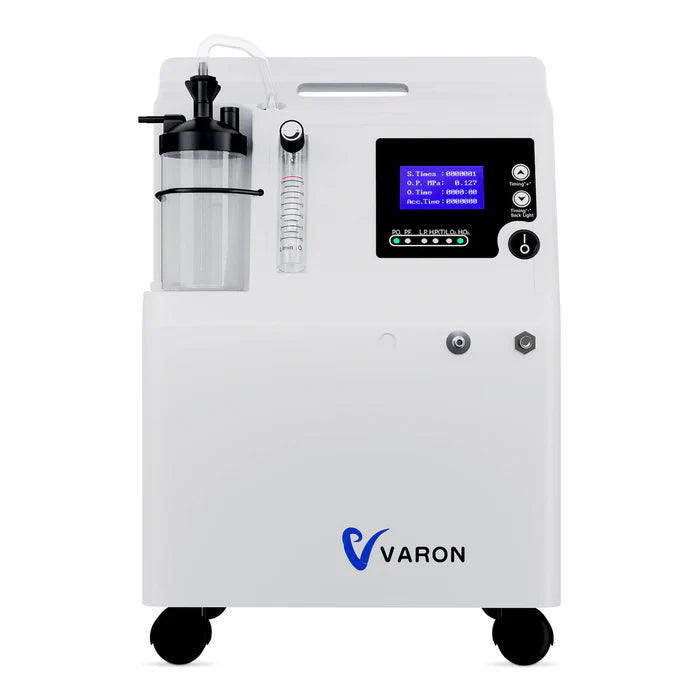
The Serene 5 is designed around a home-based routine.
It provides 0.5–5 L/min of continuous oxygen flow with an oxygen concentration of 93% ±3%. This makes it fundamentally different from a small pulse-flow concentrator intended to be carried around.
At 16.7 kg, the Serene 5 is not designed to be carried. Instead, four caster wheels allow it to be moved from one room to another when needed.
That can be useful for someone who wants to use their oxygen equipment in different parts of the house without having to lift the machine.
Quiet Operation for Everyday Home Use
Noise can make a noticeable difference when an oxygen concentrator is used for long periods.
The Serene 5 operates at ≤43 dB, helping it remain relatively discreet in a bedroom or living area. Its design also supports continuous operation, making it suitable for people who have been prescribed oxygen for extended periods.
The NHS explains that oxygen concentrators may be recommended when someone needs oxygen for most of the day, including during sleep.
The Serene 5 also has an LCD panel showing oxygen-related information, pressure and error alerts. Its timer can be set from 10 to 2,400 minutes, giving users straightforward control over the device.
Continuous Flow and Nebulisation
Another feature is the built-in nebulisation function.
This gives the Serene 5 a 2-in-1 design, although users should follow their healthcare professional's instructions regarding when and how any nebulisation equipment should be used.
The machine has a rated power of 480 VA and uses AC 110 V / 60 Hz power. UK buyers should check electrical compatibility carefully before purchasing, particularly because this specification is different from standard UK mains requirements.
If your priority is a continuous-flow oxygen concentrator designed to remain part of your home routine, the Serene 5 is the more relevant option.
VARON VP-8G: Designed for Portability

The VP-8G approaches oxygen support from a completely different direction.
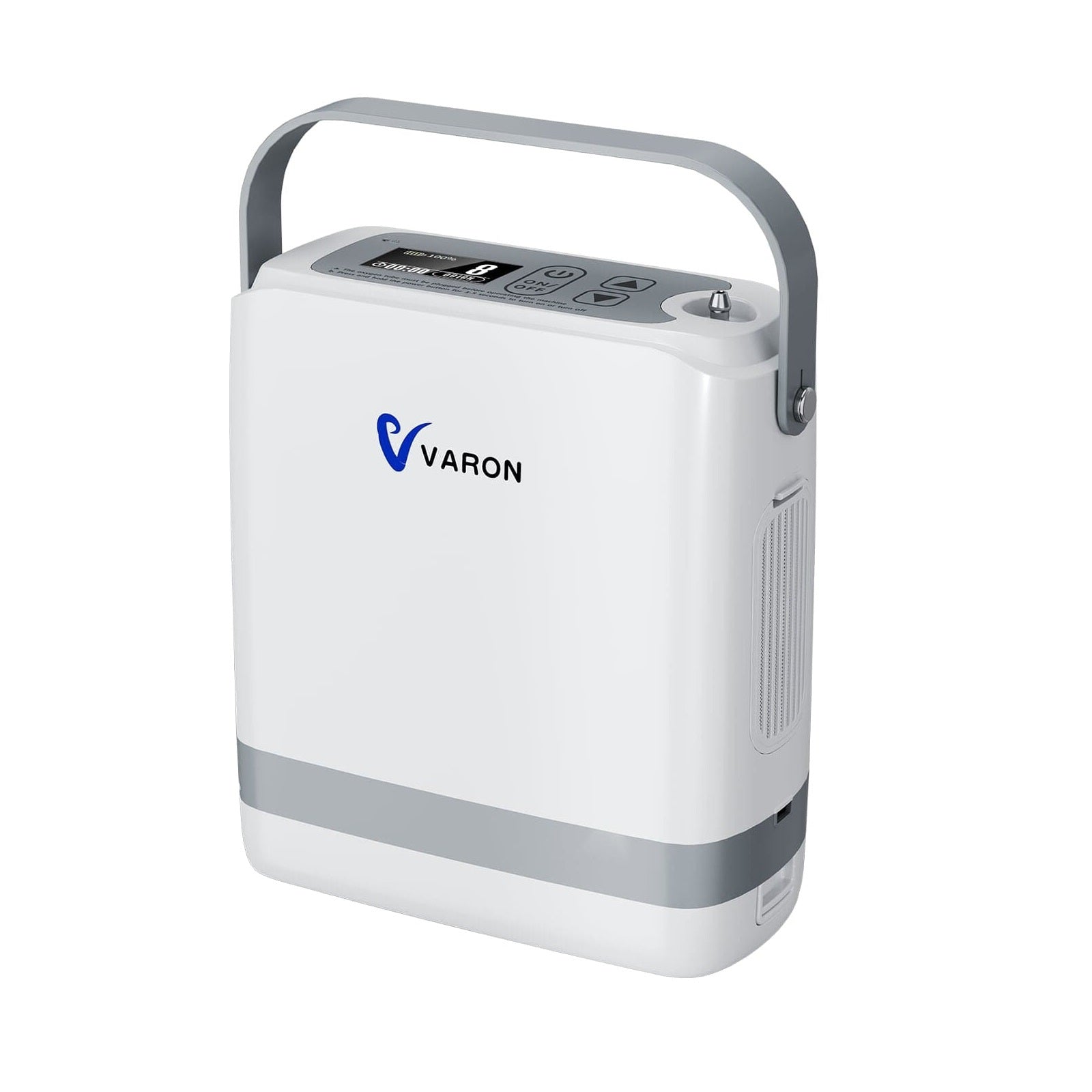
At only 1.98 kg with its battery, it is substantially lighter than the Serene 5. Its compact dimensions of 20.5 × 19.5 × 8.5 cm make it practical to carry rather than wheel.
The VP-8G offers 1–8 adjustable pulse settings and an oxygen concentration of 93% ±3%.
It uses an intelligent pulse system that provides oxygen in response to breathing, with a fixed-time automatic pulse option also available.
This makes the VP-8G particularly relevant to people who have been assessed and prescribed a suitable pulse-flow setting when moving around.
The NHS recognises portable oxygen as an option for some people who need oxygen while moving around, but portable oxygen is not suitable for everyone.
Lightweight Design and Battery Operation
The VP-8G has a 14.4 V / 96.48 Wh / 6,700 mAh removable battery with a stated battery life of up to four hours.
It supports 100–240 V AC input at 50/60 Hz and 12–16.8 V DC input, giving it considerably more flexible power options than the Serene 5.
The carrying system can be used in several ways, including by hand, over the shoulder or as a backpack. The concentrator can also remain inside its carrying bag during operation, provided the designated ventilation and connection openings remain clear.
At ≤40 dB at level 1, the VP-8G is also specified as quieter than the Serene 5.
If your prescribed oxygen therapy allows pulse delivery and maintaining mobility is a priority, the VP-8G is the more practical design.
Serene 5 vs VP-8G: Key Specifications Compared
| Feature |
|
|
|---|---|---|
| Intended use | Home-focused | Portable |
| Oxygen delivery | Continuous flow | Pulse delivery |
| Flow/settings | 0.5–5 L/min | 1–8 adjustable settings |
| Oxygen concentration | 93% ±3% | 93% ±3% |
| Noise | ≤43 dB | ≤40 dB at level 1 |
| Weight | 16.7 kg | 1.98 kg with battery |
| Battery | Not specified | Up to 4 hours |
| Rated power | 480 VA | 120 W |
| Main power | AC 110 V / 60 Hz | AC 100–240 V, 50/60 Hz |
| Special feature | Integrated nebulisation | Removable battery |
| Physical design | Four caster wheels | Carry handle and multiple carrying options |
The most important row in this table is oxygen delivery.
A higher number on a portable concentrator does not necessarily mean it delivers more oxygen than a continuous-flow machine. Pulse settings and continuous-flow litres per minute describe different delivery systems, so they should not be compared as if they were identical measurements.
Which Oxygen Concentrator Is Right for You?
The answer depends first on what your healthcare professional has prescribed.
Choose the Serene 5 if you need continuous flow at home
The Serene 5 makes more sense for someone whose prescribed oxygen therapy requires continuous flow and who spends most of their time at home.
Its 0.5–5 L/min continuous flow, wheeled design, ≤43 dB operating noise and ability to operate continuously make it suited to a home-based routine.
It can be moved between rooms, but its 16.7 kg weight means it is not intended to be carried around.
Choose the VP-8G if portability is important
The VP-8G is designed around movement.
Its 1.98 kg weight, removable battery, up-to-four-hour battery life and carrying options make it substantially easier to take with you during everyday activities.
However, portability should not be the only consideration. NICE guidance on ambulatory oxygen emphasises appropriate specialist assessment, including determining the oxygen flow needed for the individual.
That means you should not switch from continuous flow to pulse delivery simply because a portable machine is smaller.
What Should You Look For in a Home Oxygen Concentrator UK Users Can Choose?

When researching a home oxygen concentrator UK users should look at more than oxygen concentration.
The first consideration is the oxygen delivery prescribed by the healthcare team. The NHS states that home oxygen should be prescribed following appropriate assessment, with the healthcare team determining how it should be used.
The second consideration is how the machine fits into your home.
A larger continuous-flow concentrator can be a sensible choice when oxygen is required for long periods. A lighter portable unit may be more appropriate when the prescribed treatment includes oxygen while walking or being active.
The British Thoracic Society's home oxygen standards similarly emphasise appropriate assessment and safe provision of home oxygen rather than simply choosing equipment based on convenience.
Safety also matters. Oxygen increases the risk of fire, so smoking, flames and other ignition sources must be kept away from oxygen equipment. NHS guidance specifically warns against smoking while using oxygen.
For anyone comparing a home oxygen concentrator UK option, safe installation, correct settings and professional guidance should remain the priority.
Caring for Your Oxygen Concentrator
Whichever concentrator you use, basic maintenance should become part of your routine.
The supplied VARON guidance recommends regularly wiping the outside of the concentrator and keeping the ventilation areas clean. The filter should also be cleaned regularly to help prevent dust and dirt from building up.
The nasal cannula should be cleaned at least once a week. For daily use, the supplied guidance recommends replacing it every two months, while less frequent users can replace it every three to six months.
Always follow the manufacturer's instructions and any maintenance schedule provided by your oxygen service.
Key Takeaways
-
Serene 5 vs VP-8G is primarily a comparison between continuous-flow home oxygen and pulse-flow portable oxygen.
-
The Serene 5 provides 0.5–5 L/min continuous flow at 93% ±3% oxygen concentration.
-
The VP-8G provides 1–8 adjustable pulse settings at 93% ±3% oxygen concentration.
-
Serene 5 weighs 16.7 kg and uses four caster wheels for movement around the home.
-
VP-8G weighs only 1.98 kg with its battery and provides up to four hours of stated battery life.
-
A home oxygen concentrator UK users consider should match their prescribed oxygen delivery rather than simply their preferred size or price.
-
Pulse settings and continuous-flow litres per minute should not be treated as equivalent.
-
Oxygen should only be used according to professional guidance and the prescribed settings.
Choose the oxygen solution that matches your prescribed needs and makes your everyday routine more comfortable and manageable.
Conclusion
The Serene 5 vs VP-8G comparison is ultimately about two different approaches to oxygen support.
The VARON Serene 5 is a home-focused continuous-flow concentrator offering 0.5–5 L/min, 93% ±3% oxygen concentration, ≤43 dB operation and a 16.7 kg wheeled design. It is best suited to a home routine when continuous oxygen flow has been prescribed.
The VP-8G is designed around portability, weighing just 1.98 kg with its battery and providing 1–8 adjustable pulse settings, a removable battery and up to four hours of stated battery life.
For anyone searching for a home oxygen concentrator UK users can incorporate into their daily routine, the most important step is not choosing the smallest or most powerful machine. It is confirming which type of oxygen delivery is appropriate for you.
In other words, the best Serene 5 vs VP-8G choice depends on your prescribed oxygen needs, not simply the specifications that look most impressive on paper.
If you are considering a home oxygen concentrator UK option, speak with your GP, specialist or oxygen service before purchasing or changing equipment.
Frequently Asked Questions
Is the Serene 5 better than the VP-8G?
Neither machine is universally better. The Serene 5 provides continuous flow for home-focused use, while the VP-8G uses pulse delivery and is designed for portability.
Is the VP-8G continuous flow?
No. The VP-8G uses pulse oxygen delivery with 1–8 adjustable settings. It should only be used at the setting and in the manner recommended by your healthcare professional.
How long does the VP-8G battery last?
The VP-8G has a stated battery life of up to four hours. Actual operating time can vary depending on the selected setting and how the device is used.
Can I use a home oxygen concentrator without a prescription?
No. The NHS advises that home oxygen should only be used when prescribed by a GP or specialist. Buying oxygen independently and using it without professional guidance can be dangerous.
Should I choose a portable oxygen concentrator if I want to stay active?
Not automatically. Portable oxygen may be appropriate for some people, but the NHS and NICE guidance indicate that suitability should be assessed and the required oxygen delivery determined by the appropriate healthcare team.


