


Energy Use and Cost: Comparing Oxygen Concentrator Efficiency
CODE
Managing a long-term respiratory condition like COPD, asthma, bronchitis, or sleep apnea requires reliable medical equipment that fits smoothly into daily life. However, when running supplementary oxygen daily, understanding oxygen concentrator power consumption becomes a vital practical and financial priority.
With UK electricity prices sitting around 26p per kilowatt-hour (kWh), running continuous medical equipment directly affects household utility bills. Choosing an energy efficient oxygen machine isn't just about reducing monthly expenses—it reflects intelligent engineering, long-term product durability, and more sustainable home healthcare solutions.

How Oxygen Concentrator Engineering Impacts Energy Efficiency
Every oxygen generator draws power differently based on its compressor efficiency, delivery mechanisms, molecular sieve beds, and motor design. Understanding these technical components helps explain why selecting the right energy efficient oxygen machine makes such a significant difference to long-term operating costs.
1. High-Efficiency Compressors & Molecular Sieves
The internal compressor is the primary source of power draw in any concentrator. Traditional models rely on heavy-duty, high-wattage motors that run under constant strain. Modern units, however, utilize low-friction compressors paired with high-yield lithium molecular sieves. This advanced filtration configuration purifies oxygen with less airflow resistance, directly cutting down oxygen concentrator power consumption while preserving precise oxygen purity.
2. Smart Delivery Systems (Pulse-Dose vs. Continuous Flow)
Continuous-flow units supply a steady stream of oxygen constantly, requiring steady electrical draw. In contrast, units equipped with pulse-dose technology utilize sensitive pressure sensors that detect active inhalation. By delivering oxygen only when the patient inhales, pulse-flow systems dramatically lower overall energy demands during operation.
3. Thermal Management & Component Durability
Excess heat created by electrical resistance increases motor strain and accelerates wear and tear. Incorporating heat-dissipating housing materials and optimized internal airflow keeps components cooler. This smart thermal design preserves internal sieve beds, extends overall product lifespan, and maintains low oxygen concentrator power consumption year after year.
Brand Highlight: Engineering Sustainability and Efficiency into VARON Concentrators
VARON approaches respiratory technology with a clear focus on energy optimization, durability, and sustainable manufacturing. Rather than relying on power-hungry legacy components, VARON engineers home and portable systems designed to minimize household utility costs while reducing long-term electronic waste.
By combining low-wattage motors, efficient molecular sieves, and smart power management, VARON provides reliable solutions that prioritize both environmental responsibility and household budgets.
Comparing Efficiency: Specs, Features, and Operating Costs
Different respiratory prescriptions require different energy profiles. Below is a detailed breakdown comparing key specifications, engineering features, and estimated UK running costs across VARON's core models.
1. VARON VH-2 Home Oxygen Concentrator (£279.00)
-
Power Draw: 150VA ($\approx$ 150W) on AC power.
-
Flow & Purity: 1–7 L/min continuous flow (35% to 90% purity).
-
Engineering Features: Features a lithium molecular sieve, an 8-stage filtration system, and dual oxygen/nebulizer functionality. Its low motor friction helps moderate oxygen concentrator power consumption during round-the-clock home therapy.
-
Estimated UK Running Cost: At $\approx$ 26.11p/kWh, running this unit continuously for 24 hours consumes 3.6 kWh/day, costing roughly £0.94 per day ($\approx$ £28.20 per month).
2. VARON VP-2 Pulse Portable Oxygen Concentrator (£639.00)
-
Power Draw: 92Wh replaceable battery / AC (100–240V) / DC (12–16.8V).
-
Flow & Purity: 93% $\pm$ 3% medical-grade oxygen purity across 5 adjustable pulse settings.
-
Engineering Features: Designed as a ultra-lightweight (2.2 kg) energy efficient oxygen machine, the VP-2 features a Smart Dual-Mode delivery system (Sensor Mode and Auto Mode). By delivering oxygen only during active inhalation, peak energy draw is kept to a minimum.
-
Estimated UK Running Cost: Running on wall power for 8 hours daily draws negligible energy, adding only pennies per day to standard household electricity costs.
3. VARON VL-2 3L Light Continuous Portable Oxygen Concentrator (£279.00)
-
Power Draw: Ultra-low 25W power rating.
-
Flow & Purity: Continuous 3 L/min flow at 30% $\pm$ 2.5% purity.
-
Engineering Features: Weighing just 1.5 kg, the VL-2 sets a benchmark as an energy efficient oxygen machine for light supplemental support. Its micro-compressor delivers quiet, ultra-low-wattage performance without sacrificing structural durability.
-
Estimated UK Running Cost: Running 24 hours continuously consumes just 0.6 kWh/day, costing approximately £0.16 per day ($\approx$ £4.70 per month).
Technical Specifications and Energy Efficiency Breakdown
| Model | Flow Type & Rate | Concentration | Power Specs | Noise Level | Net Weight | Retail Price |
|
VARON VH-2 Home Oxygen Concentrator |
Continuous (1–7 L/min) | 35%–90% | 150VA (AC110V) | ≤48 dB | 12.13 lbs | £279.00 |
|
VARON VP-2 Pulse Portable Oxygen Concentrator |
Pulse Flow (1–5 Adjustable) | 93% ± 3% | 92Wh Battery / AC-DC | ≤58 dB | 4.85 lbs | £639.00 |
|
VARON VL-2 3L Light Portable Oxygen Concentrator |
Continuous (3L/min) | 30% ± 2.5% | 25W (AC/DC/Battery) | <52 dB | 3.30 lbs | £279.00 |
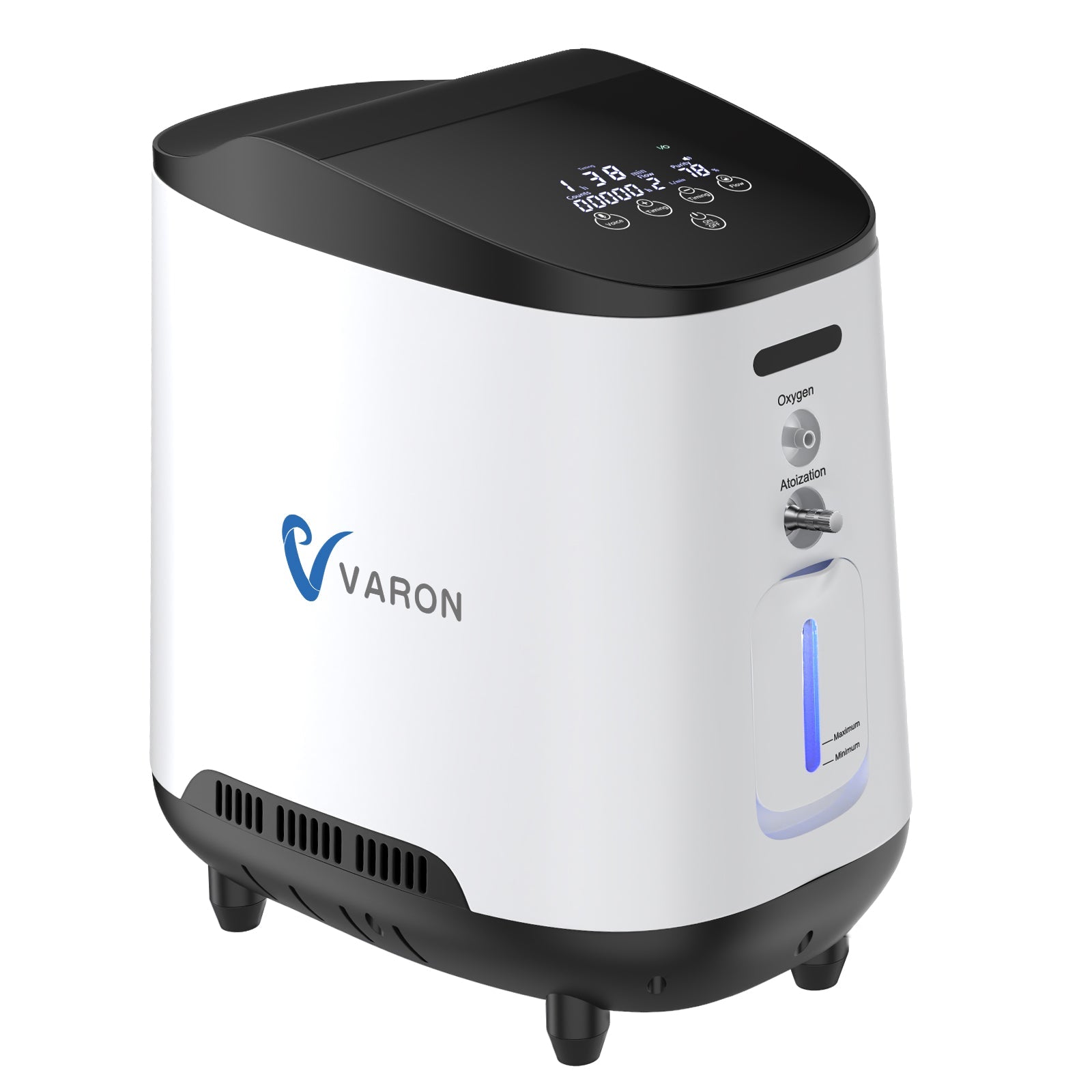
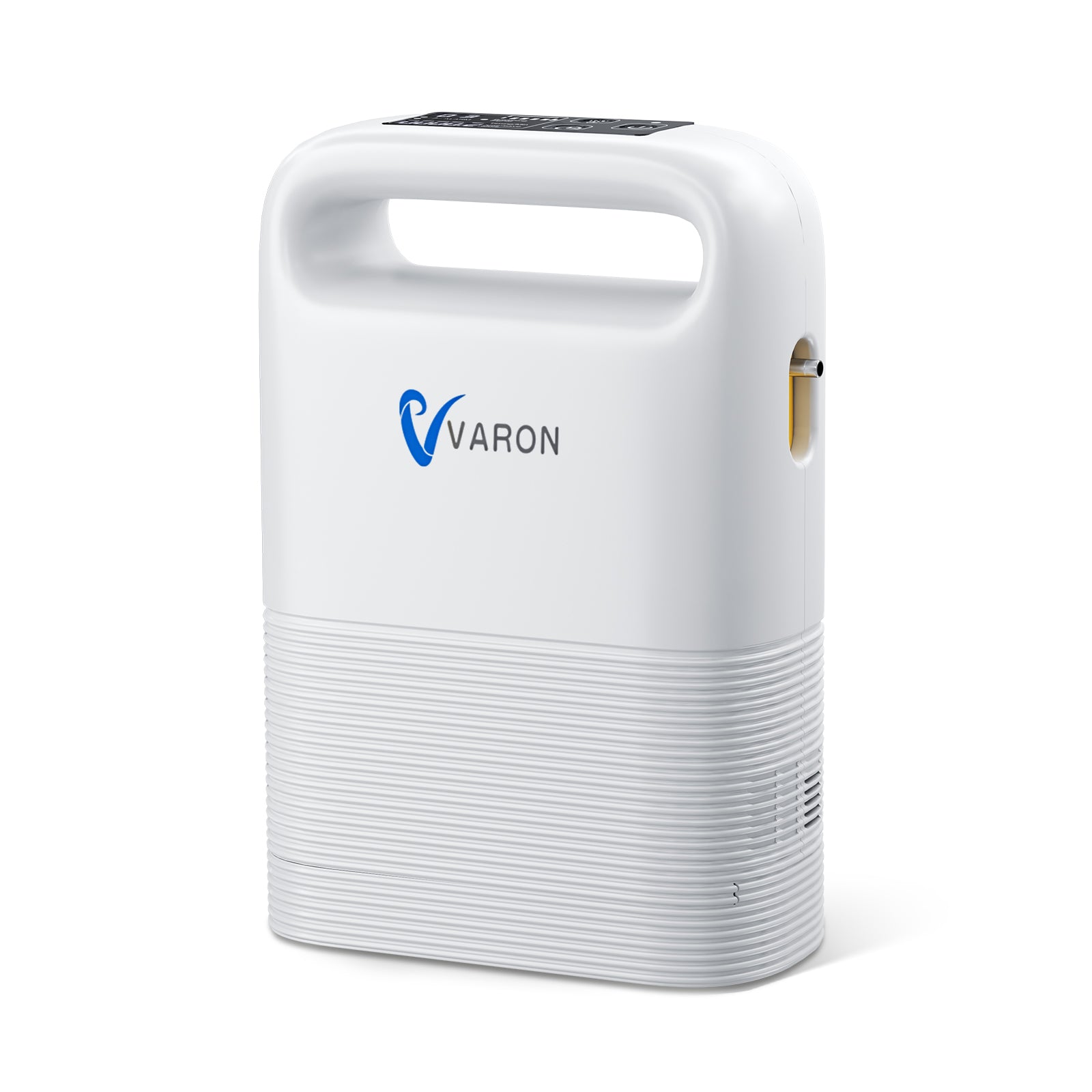
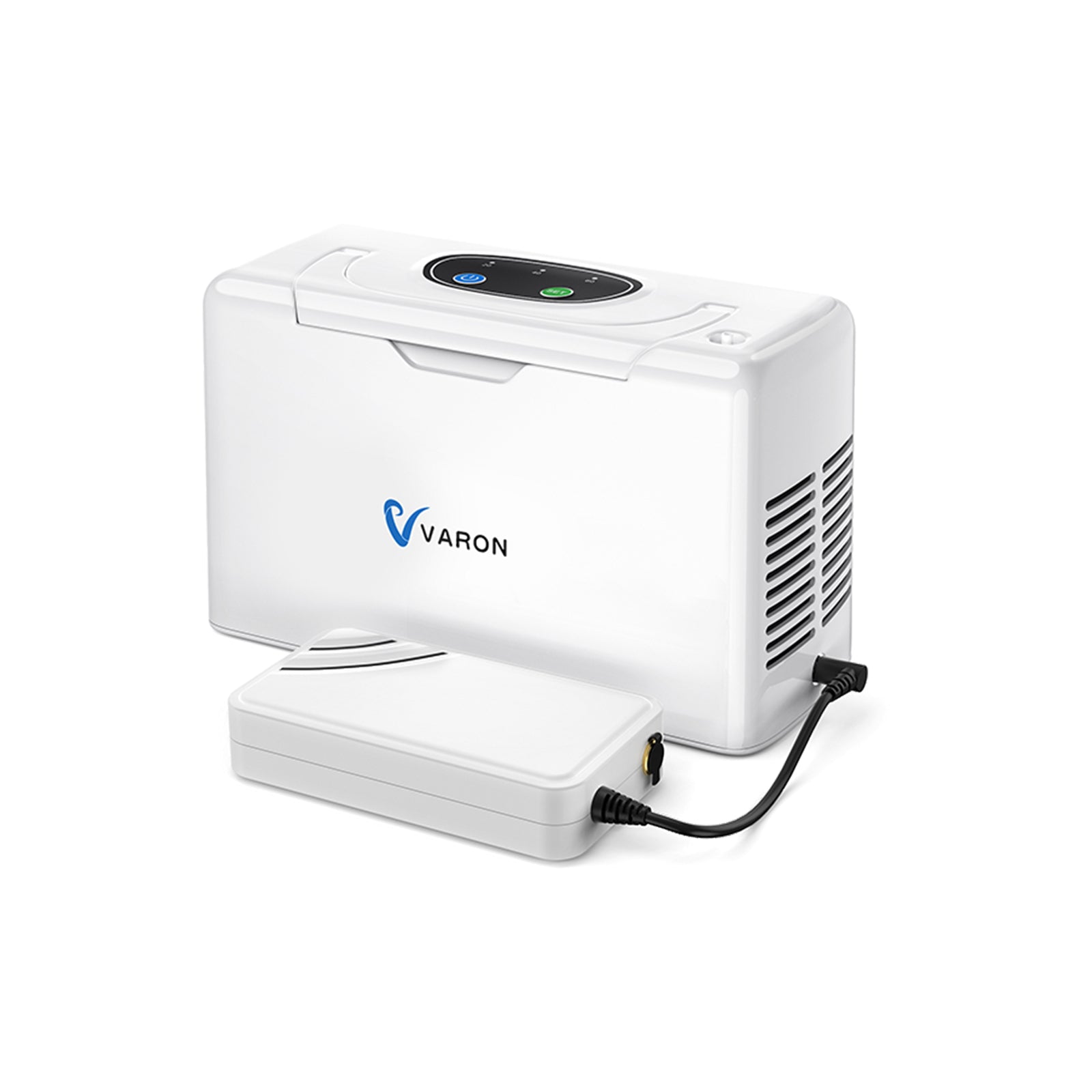
As shown above, selecting an energy efficient oxygen machine like the 25W VL-2 or pulse-based VP-2 drastically cuts electrical demand, while the VH-2 offers heavy-duty continuous home care at a reasonable power footprint.
Practical Maintenance Tips to Keep Power Consumption Low

Even the most efficient oxygen equipment can experience increased energy draw if not properly maintained. When air intake filters accumulate dust or debris, the internal compressor must work significantly harder, increasing wattage consumption and reducing overall product lifespan.
-
Replace Air Intake Cotton: Replace intake filter cotton every 100–200 hours of use (or sooner if discolored) to prevent engine strain.
-
Clean Main Filters Monthly: Wipe down the outer intake housing monthly to remove ambient dust and keep internal airflow smooth and resistance-free.
-
Clean Cannulas & Tubing Regularly: Ensure tubing remains clear of obstructions or kinks so the motor operates at its optimal backpressure level.
-
Protect Electrical Components: When powering portable units via vehicle DC outlets, always start the vehicle engine before plugging in the adapter to avoid voltage surges.
Choosing a Sustainable and Cost-Effective Oxygen Solution
Understanding oxygen concentrator power consumption ensures you can maintain continuous medical support without facing unexpectedly high energy bills. By investing in modern equipment engineered with pulse-dose delivery, efficient compressors, and durable filtration components, you secure both immediate cost savings and a lower long-term environmental footprint.
Looking for an energy efficient oxygen machine that balances performance, portability, and low running costs? Explore VARON's full lineup of oxygen concentrators today and use promo code VARON10 at checkout for exclusive discounts!


