



Oxygen Flow Rates Explained: Understanding LPM Settings
CODE
Understanding your oxygen flow rate is important if you have been advised to use supplemental oxygen. You may have seen settings such as 1 LPM, 2 LPM or 5 LPM on an oxygen device and wondered what these numbers actually mean.
These numbers describe how much oxygen flows through the equipment each minute. Knowing how LPM oxygen settings work can help you understand your instructions, use your equipment correctly and recognise why changing the prescribed setting without professional advice can be unsafe.
Whether you are an oxygen user or a family member helping someone manage their daily routine, this guide explains the basics in simple terms.
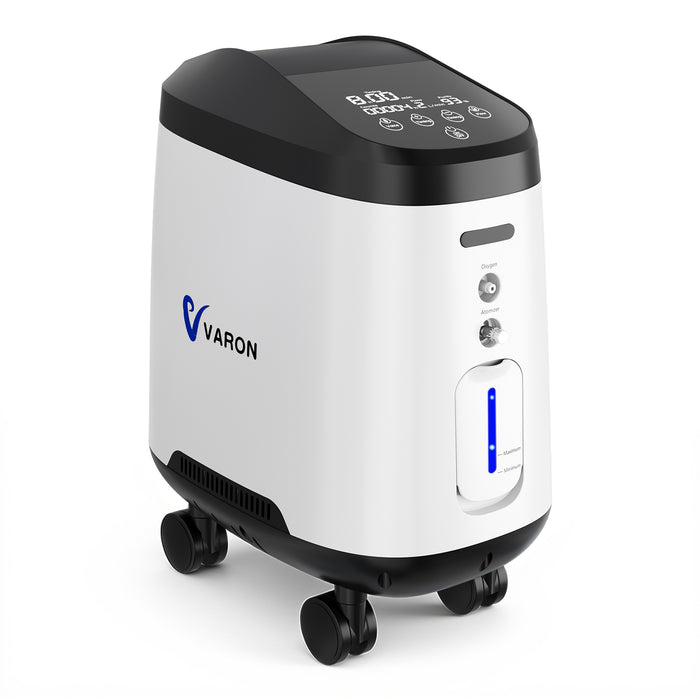
VARON VH-2 Pro Wheel Edition | Continuous Flow Home Oxygen Concentrator (1-9 settings)
What Does LPM Mean in Oxygen Therapy?
LPM stands for litres per minute. It measures the volume of oxygen delivered by an oxygen source every minute.
For example:
-
1 LPM: One litre of oxygen flows each minute.
-
2 LPM: Two litres of oxygen flow each minute.
-
3 LPM: Three litres of oxygen flow each minute.
-
5 LPM: Five litres of oxygen flow each minute.
A higher number means a greater volume of oxygen is flowing through the equipment. However, it does not automatically mean that a higher setting is better for everyone.
Your prescribed oxygen flow rate depends on your individual oxygen requirements and professional assessment.
How Do Oxygen Flow Rate Settings Work?

An oxygen device has controls that allow the flow to be set according to the instructions provided by a healthcare professional.
For example, someone may be advised to use 2 LPM while resting. Another person may have different instructions for resting, sleeping or physical activity.
What Do the Numbers on an Oxygen Device Mean?
The numbers on a flow control indicate the selected output setting, usually measured in LPM for continuous-flow equipment.
If your instructions specify 2 LPM, the equipment should be set to the corresponding 2 LPM position. Always check that the control is correctly positioned and that the tubing is properly connected.
Does a Higher LPM Setting Mean More Oxygen?
Generally, a higher continuous-flow setting delivers a greater volume of oxygen each minute.
However, the amount of oxygen a person needs is not determined by the number alone. Individual requirements, the delivery equipment and professional assessment all matter.
Never increase or decrease your prescribed oxygen flow rate simply because you feel more or less breathless.
What Is the Difference Between Continuous Flow and Pulse Flow?

Not all oxygen equipment delivers oxygen in the same way. Understanding this difference is particularly important when comparing devices.
Continuous Flow
Continuous-flow equipment provides a steady supply of oxygen at the selected LPM setting.
For example, a setting of 2 LPM means the device delivers oxygen continuously at that specified rate.
Pulse Flow
Pulse-flow equipment releases oxygen in short amounts when it detects an inhalation.
Some devices use numbered settings rather than displaying an equivalent continuous-flow rate. A setting of 2 on a pulse-flow device does not necessarily mean 2 LPM of continuous oxygen.
These systems should not be compared using their numbers alone. If you are considering different equipment, ask a healthcare professional to confirm whether its delivery method meets your requirements.
How Do You Know Which Oxygen Flow Rate You Need?
There is no single oxygen flow rate that is suitable for everyone.
Healthcare professionals assess individual needs before recommending an appropriate setting. They may consider oxygen measurements, daily activities, sleep requirements and how a person responds to oxygen support.
Your instructions may include different settings for:
-
Resting or sitting quietly.
-
Walking or completing daily activities.
-
Sleeping at night.
These differences are important. Do not assume that one setting can automatically be used for every situation.
Can You Adjust LPM Oxygen Settings Yourself?
You should only change your settings if your healthcare professional has provided specific instructions explaining when and how to do so.
Using too little or too much oxygen can create risks, depending on your individual circumstances. The NHS advises users not to allow anyone to change the flow rate ordered by their healthcare professional.
If your current setting seems uncomfortable or you feel that your oxygen support is insufficient, contact your healthcare team rather than experimenting with the controls.
Common Mistakes When Using Oxygen Flow Settings
Even familiar equipment can become confusing, particularly for older users and caregivers.
Here are some mistakes worth avoiding:
1. Increasing the setting without advice
Feeling breathless does not automatically mean you need a higher setting. Follow your prescribed instructions and seek medical advice if your symptoms change.
2. Confusing pulse settings with LPM
A numbered pulse-flow setting is not necessarily equivalent to the same number on continuous-flow equipment.
3. Ignoring the prescribed instructions
Keep your oxygen instructions somewhere accessible so family members and caregivers can check them when needed.
4. Forgetting to check the tubing
Kinked, trapped or disconnected tubing can interfere with oxygen delivery. Check connections and keep the tubing clear.
5. Assuming every device works the same way
Different equipment has different delivery methods, controls and operating requirements. Always read the manufacturer's instructions.
Choosing Oxygen Equipment That Matches Your Needs

Understanding your oxygen flow rate is only one part of managing oxygen equipment. The type of device, delivery method and available settings should also match your individual requirements.
VARON offers different categories of oxygen equipment, including portable options, home-use equipment and lightweight options for users with different daily needs.
If you are exploring available choices, visit VARON's official website to check the available equipment and compare its features.
Remember that selecting equipment should never be based on its maximum LPM number alone. Ask your healthcare professional to confirm that the delivery method and available settings are appropriate for your prescribed oxygen needs.
Key Takeaways
-
LPM means litres per minute and describes oxygen flow volume.
-
A higher continuous-flow setting delivers more oxygen each minute, but is not automatically better.
-
Continuous flow and pulse flow use different delivery methods.
-
Your prescribed settings may vary between resting, sleeping and physical activity.
-
Never change your prescribed oxygen settings without professional instructions.
-
Always check the equipment's operating instructions and delivery method.
Conclusion
Understanding your oxygen flow rate and LPM oxygen settings helps you use oxygen equipment more confidently and responsibly. Knowing what the numbers mean, recognising the difference between continuous and pulse flow, and following professional instructions are all important parts of safe oxygen use.
The right oxygen flow rate is not simply the highest number available. It is the setting recommended for your individual needs. Take time to understand your LPM oxygen settings, keep your instructions accessible and speak with your healthcare professional whenever something is unclear.
VARON provides different oxygen equipment options, including portable, home-use and lightweight choices. Visit VARON to explore the available options and find out more about the equipment features.
Frequently Asked Questions
What does 2 LPM mean on an oxygen device?
It means the equipment is set to deliver two litres of oxygen per minute when operating in continuous-flow mode.
Is 2 LPM stronger than 1 LPM?
In continuous-flow equipment, 2 LPM delivers a greater volume of oxygen each minute than 1 LPM. However, the appropriate setting depends on individual requirements.
Can I increase my oxygen flow rate if I feel breathless?
No. Do not increase your setting without professional instructions. Contact your healthcare team if you experience new or worsening breathlessness.
Are pulse-flow settings the same as LPM?
No. Pulse-flow settings refer to oxygen released in short amounts during inhalation. They are not directly equivalent to continuous-flow LPM measurements.
Does everyone need the same oxygen flow rate?
No. Oxygen requirements vary between individuals. A healthcare professional must assess and recommend the appropriate setting.
Sources and Further Reading
-
NHS inform – Home Oxygen Treatment – Guidance on prescribed oxygen use and equipment safety.
-
British Thoracic Society – Guidelines for Home Oxygen Use in Adults – Professional guidance on oxygen assessment and prescribed flow rates.


